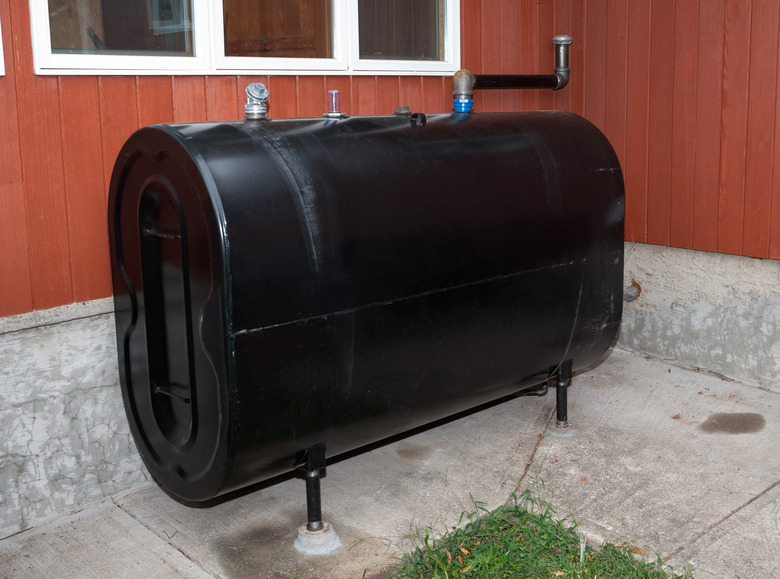

Most people picture Rego Park as apartment towers along Queens Boulevard, and a lot of it is. But the pocket of detached and semi-detached houses south of the boulevard is where the oil tanks are, and there are more of them still running than you would guess. Domino's Oil Tank Service has been replacing tanks in these homes since 1980. Our shop is in Woodside, about fifteen minutes up the Long Island Expressway.
- Free same-day estimates throughout Rego Park 11374
- Tanks from $3,200 installed, old tank removal and disposal included
- Licensed and insured, with all three tank models stocked on the truck
- Experience with both private houses and co-op boiler rooms
- 24-hour emergency response for active leaks
Oil tank trouble in Rego Park? Call now for a free estimate. Most jobs finish the same day.
Call (718) 989-2105 ➤The Rego Park Houses Where Oil Heat Survives
The Crescents — the curved streets in the southern part of the neighborhood, Wetherole, Saunders, Booth and the roads around them — are the heart of our work here. These are largely 1920s and 1930s detached and semi-detached homes, brick and stucco, on real lots with driveways. From a tank replacement standpoint they are close to ideal: a truck can get near the house, there is often a side or rear entrance to the basement, and the cellars have decent headroom. When a Rego Park job goes quickly, it is usually one of these.
The Queens Boulevard corridor is the opposite situation. The large co-op and rental buildings there run central boilers with commercial-scale tanks in dedicated boiler rooms. That is not a 275 gallon residential job and it is not a decision an individual shareholder makes. If you are on a board or managing one of these buildings, call and we will discuss it properly rather than quoting you house pricing.
The blocks toward Forest Hills and Elmhurst mix attached row houses in with the detached stock. Attached homes bring the usual constraint: everything in and out goes down an interior staircase, because there is no side yard and often no cellar hatch. It is very manageable, but it dictates which tank we recommend.
One thing worth flagging in the older Crescent houses: original coal-to-oil conversions. A number of these homes were built with coal heat and converted in the 1930s or 1940s, and occasionally we still find the original conversion-era tank in service. If your tank has a hand-riveted look, an unusual size, or no legible data plate, it is old enough that replacement is not really a question of if.
Warning Signs Worth Acting On
Tanks corrode from the inside. Water condenses out of the air inside the tank, settles under the oil because it is heavier, and eats through the steel floor where nobody can see it. The exterior often looks fine until the day it does not. Call if you see:
- Staining, damp patches, or an oily sheen on the floor under the tank
- Rust at the bottom seam, on the legs, or around the fill and vent lines
- An oil smell in the basement that lingers, strongest after a delivery
- Pitting, denting, or bulging anywhere on the tank shell
- A tank over 20 years old, or one you cannot date
- A fuel supplier who has flagged the tank or stopped filling it
A planned replacement costs a few thousand dollars. An unplanned one, where oil reaches a basement floor and soaks into the slab, can cost many times that, and standard homeowners policies frequently exclude it. If you already smell or see oil, call now and read our emergency leaking tank page after.
Picking the Right Tank for a Rego Park Basement
All three are stocked on our trucks, so most replacements are a single visit.
- Granby Standard 275 gallon — $3,200 installed. Single-wall steel and the most economical option, well suited to a dry basement with workable access.
- Granby EcoGuard — $3,890 installed. Double-wall steel with a containment layer that catches an inner-tank breach before it reaches your floor.
- Roth double-wall — $3,990 installed. A polyethylene inner tank that cannot rust, a galvanized outer shell, and a $1 million environmental insurance policy included.
In the Crescents, where basements tend to be roomy and dry and access is straightforward, any of the three works and the decision comes down to how much protection you want. The Granby Standard is genuinely fine in that setting. In the attached homes toward the Elmhurst line, where the tank has to come down a narrow staircase, the Roth's vertical 44 by 26 inch footprint and 185 pound empty weight often make it the only practical choice.
What the Job Involves
- Free estimate. Tell us the tank size, where it sits, and how you reach it. We can often price it on the phone; otherwise we come out same day at no cost.
- Old tank out. Remaining oil is pumped and the usable fuel held for transfer. The tank is removed, or cut down in place if it cannot leave whole, then hauled away and disposed of.
- New tank in. Set on a proper base, connected to your oil lines and burner, with fill and vent piping updated as needed and a new filter and shutoff valve.
- Test and clean. Burner fired, joints checked under pressure, your usable oil transferred back, basement left clean. Three to four hours is typical.
Where We Work in Rego Park
All of 11374 — the Crescents and the streets around Wetherole and Saunders, the residential blocks between Woodhaven Boulevard and the Long Island Expressway, the 63rd Drive and 67th Avenue corridors, and the buildings along Queens Boulevard. We also serve neighboring Forest Hills and Middle Village.
More about our team, or see the full borough on our Queens service areas page.
Frequently Asked Questions
How much does oil tank replacement cost in Rego Park?
$3,200 installed for the Granby Standard 275 gallon, $3,890 for the Granby EcoGuard, and $3,990 for the Roth double-wall. Each price includes the tank, labor, removal and disposal of the old tank, connection to your lines and burner, and a full system test. Our oil tank replacement cost page has the full breakdown.
I live in a Queens Boulevard co-op. Is this something I can arrange?
Generally not as an individual shareholder. Those buildings run central boilers with commercial-scale tanks owned by the corporation, so it goes through the board and managing agent. We are happy to provide a written scope and price for a board to review.
My house is in the Crescents. Is access usually a problem?
Rarely. The detached and semi-detached homes on the Crescent streets typically have driveways, decent cellar headroom, and often a side or rear basement entrance. These are among the more straightforward replacements we do anywhere in Queens.
My tank looks really old and has no label. What does that mean?
It usually means it dates to an original coal-to-oil conversion, which in these houses would put it in the 1930s or 1940s. A tank that old is well past replacement regardless of how it looks from the outside. We can confirm during a free estimate.
Can you do it in one visit?
Almost always. We stock all three tank models on the truck, so there is no waiting on a delivery. A typical Rego Park replacement runs three to four hours including removing the old tank.
What happens to the oil left in my tank?
We pump it out, hold the usable portion, and transfer it into your new tank so you are not buying the same fuel twice. Water and sludge from the bottom are separated out and disposed of properly.
Do you offer emergency service?
Yes, 24 hours a day for active leaks. Call (718) 989-2105. Keep the area ventilated, keep people and pets away, and do not try to move or patch the tank yourself.
More questions about tank sizing, permits, and what affects the final price are answered on our oil tank FAQ page.
Ready to replace your Rego Park oil tank? Call for a free estimate or book your same-day replacement.
Get Your Free Estimate ➤