
Glendale shares a ZIP code with Ridgewood but is a noticeably easier neighborhood to work in. Where Ridgewood is wall-to-wall attached row houses, Glendale mixes in detached and semi-detached homes, frame construction alongside brick, and a good number of properties with driveways and side access. Domino's Oil Tank Service has been replacing tanks across Glendale since 1980.
- Free same-day estimates throughout Glendale 11385
- Experience with both frame houses and attached brick homes
- Tanks from $3,200 installed, old tank removal and disposal included
- Licensed and insured, forty-five years working in Queens
- 24-hour emergency response for active leaks
Oil tank replacement in Glendale. Free estimate, honest pricing, most jobs finished in one visit.
Call (718) 989-2105 ➤Two Kinds of Glendale House
The wood-frame houses, scattered through the older streets and particularly toward the southern end near Forest Park and Cooper Avenue, are the more interesting job. Frame houses of this era often have lower cellar ceilings, occasionally uneven floors, and stairs that were built narrow. They also tend to have damper cellars than brick construction, and damp accelerates corrosion on the outside of a steel tank while the inside is corroding anyway. When we recommend a rust-proof inner tank in Glendale, it is usually in one of these houses.
The brick and semi-attached homes through the middle of the neighborhood, around Myrtle Avenue and the streets running toward Middle Village, are more like their Ridgewood cousins but with more breathing room. Many have driveways or shared drives, and a reasonable number have a side or rear basement entrance, which changes everything about how a tank gets in.
The blocks bordering Forest Park include some larger detached properties on better lots, with full basements and comfortable access. These are among the more straightforward replacements we do in this part of the borough.
One practical Glendale note: shared driveways are common here, as they are in neighboring Middle Village. If your driveway is shared with the house next door, it is worth a word with your neighbour before installation day. We only need it for a few hours, but a blocked shared drive at the wrong moment makes for an unnecessary argument.
How to Tell Your Tank Is Going
Tanks corrode from the inside out, where condensed water sits beneath the oil and works through the steel floor. The outside of the tank is the last place the problem shows. Look for:
- Oil odor in the basement, particularly in the day or two after a fill
- Corrosion creeping along the bottom seam or up from the tank legs
- Discoloration, damp, or a slick patch on the floor beneath the tank
- Condensation beading heavily on the shell in cold weather
- Twenty years or more in service, or an unknown installation date
- Your oil supplier declining to deliver until the tank is replaced
In an older frame house, oil that reaches a cellar floor gets into the structure quickly. If you can smell it, treat that as urgent — our emergency leaking tank page explains what to do while we are on the way.
Choosing a Tank in Glendale
- Granby Standard 275 gallon at $3,200 installed. The straightforward single-wall steel tank. If your cellar is dry and the route in is clear, it does the job without paying for protection you may not need.
- Granby EcoGuard at $3,890 installed. Steel construction with a second wall around it, so if the inner tank ever gives way the oil is contained instead of ending up on your floor.
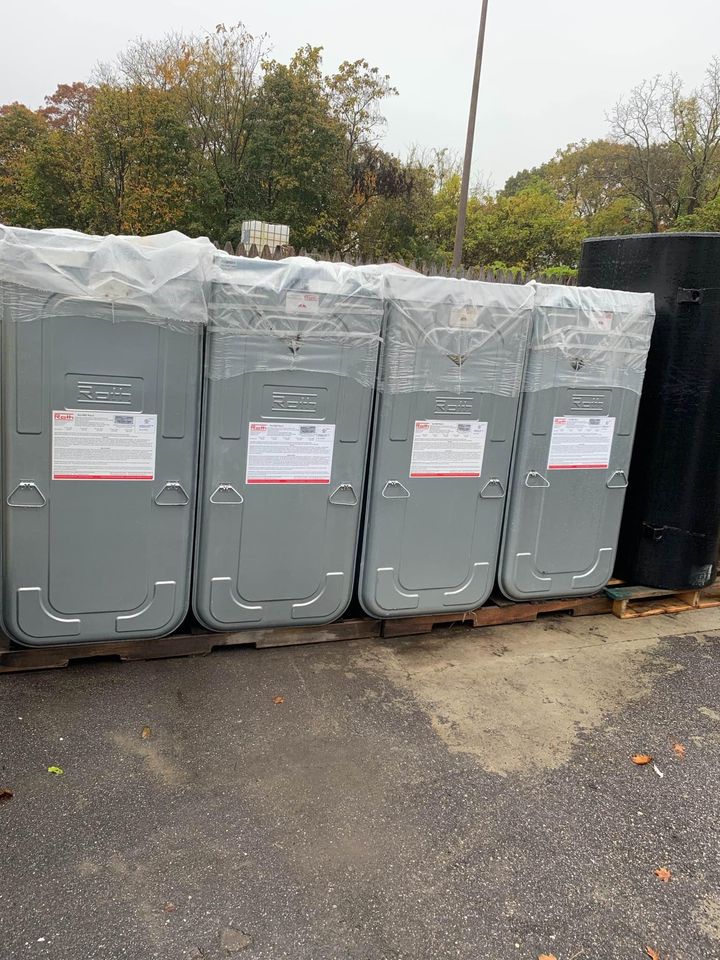
- Roth double-wall at $3,990 installed. The inner tank is blow-molded polyethylene, so rust is simply not a failure mode. Comes with a $1 million environmental insurance policy at no extra cost.
In the frame houses with damp cellars, we lean toward the Roth. A polyethylene inner tank simply does not rust, which removes the failure mode that the environment in those basements accelerates. In the brick and semi-attached homes with better access and drier cellars, all three are practical and it becomes a straightforward decision about how much protection you want to buy. As always, headroom is checked before a vertical tank is recommended.
The Process
- Free estimate. Tell us the tank size, where it sits, and how you reach it. We can often price it on the phone; otherwise we come out same day at no cost.
- Old tank out. Remaining oil is pumped and the usable fuel held for transfer. The tank is removed, or cut down in place if it cannot leave whole, then hauled away and disposed of.
- New tank in. Set on a proper base, connected to your oil lines and burner, with fill and vent piping updated as needed and a new filter and shutoff valve.
- Test and clean. Burner fired, joints checked under pressure, your usable oil transferred back, basement left clean. Three to four hours is typical.
Where We Work in Glendale
All of Glendale within 11385 — the streets around Myrtle Avenue and Cooper Avenue, the blocks bordering Forest Park, the area near Atlas Park, and the sections running toward Middle Village and the Brooklyn line. Neighboring Ridgewood, Middle Village, and Woodhaven are covered as well.
More about us, or see the full borough on our Queens service areas page.
Frequently Asked Questions
Is Glendale easier to work in than Ridgewood?
Generally yes, despite sharing a ZIP code. Glendale has more detached and semi-attached housing, more driveways, and more properties with a side or rear basement entrance. That widens the tank options available to most homeowners here.
My cellar is damp. Does that affect which tank I should get?
It is a good argument for a rust-proof inner tank. Damp accelerates corrosion on the outside of a steel tank at the same time it is corroding internally. The Roth's polyethylene inner tank does not rust at all, which removes that failure mode.
We have a shared driveway. Is that a problem?
Not usually, but it is worth mentioning to your neighbour beforehand. We need the drive for a few hours on installation day, and a quick heads-up avoids an awkward conversation at the wrong moment.
What does it cost in Glendale?
$3,200 installed for the Granby Standard, $3,890 for the Granby EcoGuard, $3,990 for the Roth, each including the tank, labor, removal and disposal of the old tank, and a full system test.
My house is an old wood-frame with a low cellar. What fits?
Frequently a horizontal Granby, because vertical tanks need standing clearance that low frame-house cellars often lack. We measure headroom at the estimate so you know before installation day rather than during it.
Do you take the old tank away?
Yes, and it is included in the price. If it will not come out whole, it is cut down in place and carried out in sections.
How fast can you get here?
Usually same day for an estimate. The replacement itself is normally a single visit of three to four hours since we stock all three tanks on the truck.
More questions about tank sizing, permits, and what affects the final price are answered on our oil tank FAQ page.
Ready to replace your Glendale oil tank? Call for a free estimate anywhere in Glendale.
Get Your Free Estimate ➤