
Richmond Hill has the grandest old housing in southern Queens — large Victorian frame houses with wraparound porches, turrets and full-height basements, built when this was one of the city's first planned suburbs. They are wonderful houses and they hide some of the oldest heating oil tanks we ever find. Domino's Oil Tank Service has been working in them since 1980.
- Free same-day estimates across Richmond Hill 11418 and 11419
- Experience with Victorian houses and original coal-to-oil conversions
- Tanks from $3,200 installed, old tank removal and disposal included
- Licensed and insured, forty-five years serving Queens
- 24-hour emergency response for active leaks
Oil tank replacement in Richmond Hill. Free estimate, honest assessment, most jobs done in one visit.
Call (718) 989-2105 ➤Victorian Houses and the Tanks They Came With
Old Richmond Hill, north of Jamaica Avenue around Lefferts Boulevard and the streets running up toward Forest Park, is the heart of it: substantial Queen Anne and Colonial Revival frame houses on real lots, most from the 1890s through the 1910s. These homes were built for coal. Almost every one of them was converted to oil at some point, generally between the 1920s and the 1950s, and the tank installed during that conversion is occasionally still sitting there.
What that means practically: these are the largest and oldest tanks in our normal service area. Some are not 275 gallon units at all but larger, oddly proportioned tanks sized for a big drafty house, sitting on brick piers in a corner of a basement that has had three generations of other equipment built up around it. Getting one out is a proper job. It gets drained, cut down where it stands, and carried out in sections — and because these basements are generally full-height with decent stairs, that is far more manageable here than it would be in a Ridgewood cellar.
The good news about Victorian houses is space. Full-height basements, wide stairs by the standards of old housing, and frequently a side or rear entrance. Once the old tank is out, putting a new one in is usually straightforward.
South of Jamaica Avenue and toward Liberty Avenue, the housing shifts to smaller frame houses and attached and semi-attached homes, closer in character to neighboring Ozone Park, with tighter cellars and narrower access.
How to Know Your Tank Is Done
The failure begins inside, where water condensing in the tank settles beneath the oil and corrodes the steel floor. Nothing shows on the outside until late. Look for:
- Staining, damp patches, or an oily sheen on the floor under the tank
- Rust at the bottom seam, on the legs, or around the fill and vent lines
- An oil smell in the basement that lingers, strongest after a delivery
- Pitting, denting, or bulging anywhere on the tank shell
- A tank over 20 years old, or one you cannot date
- A fuel supplier who has flagged the tank or stopped filling it
With a conversion-era tank, none of this is really the question — age alone settles it. A tank installed in the 1930s has no business still holding oil. If you are seeing oil now, read our emergency leaking tank page and call us.
Tank Options for a Richmond Hill Home
- Granby Standard 275 gallon — $3,200 installed. Single-wall steel and the most economical option, well suited to a dry basement with workable access.
- Granby EcoGuard — $3,890 installed. Double-wall steel with a containment layer that catches an inner-tank breach before it reaches your floor.
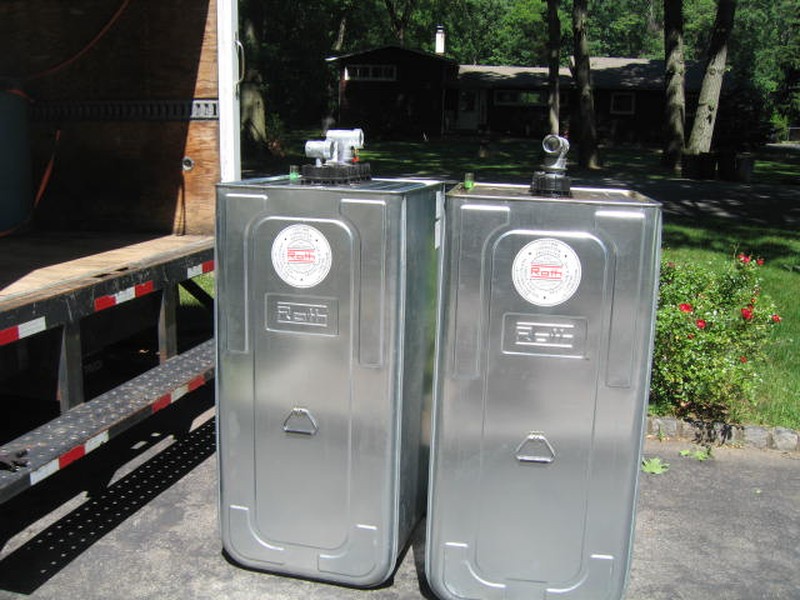
- Roth double-wall — $3,990 installed. A polyethylene inner tank that cannot rust, a galvanized outer shell, and a $1 million environmental insurance policy included.
Access is rarely the limiting factor in the Victorian houses, so you get a real choice. Two things push us toward double-wall here. First, these basements are often damp, and damp accelerates corrosion on steel from the outside while it is already corroding from within. Second, many of these houses have had basements partly finished over the years, and a release into finished space costs far more to put right than one onto bare concrete. If your cellar is dry and unfinished, the Granby Standard remains a perfectly sound tank.
The Process
- Step one: the estimate. Free, no obligation, and usually available the same day you call. You get a firm price before anything is touched.
- Step two: the old tank comes out. Oil pumped and preserved, tank removed and disposed of properly. Cut down on site if there is no way to get it out intact.
- Step three: the new tank goes in. Set level on a proper base, piped into your existing system, fill and vent lines replaced where needed, new filter and shutoff valve.
- Step four: testing. The burner is fired and every connection checked under pressure before we pack up. Your oil goes back in the new tank and the basement gets cleaned. Three to four hours, typically.
Where We Work in Richmond Hill
Both ZIP codes, 11418 and 11419 — Old Richmond Hill and the streets around Lefferts Boulevard, the blocks north toward Forest Park, the Jamaica Avenue corridor, South Richmond Hill, and the sections running toward Liberty Avenue. Neighboring Woodhaven, Ozone Park, and Jamaica are covered too.
More about our crew, or the whole borough on our Queens service areas page.
Frequently Asked Questions
My Victorian house has an enormous old tank in the basement. Can you remove it?
Yes. These conversion-era tanks are the oldest and largest we regularly deal with, and some are not standard 275 gallon units at all. It gets drained, cut down where it stands, and carried out in sections. Richmond Hill basements are generally full-height with decent stairs, which makes that far easier than in a cramped cellar.
My tank sits on brick piers and has no label. How old is it?
Almost certainly from the original coal-to-oil conversion, which in these houses usually means somewhere between the 1920s and 1950s. Whatever the exact date, it is well beyond any sensible service life.
What does it cost in Richmond Hill?
$3,200 installed for the Granby Standard, $3,890 for the EcoGuard, and $3,990 for the Roth, each including removal and disposal of the old tank. Removing an unusually large conversion-era tank can add labor, which we would price into the estimate up front.
Is access a problem in these old houses?
Usually less than people expect. Victorian houses in Old Richmond Hill tend to have full-height basements, reasonably wide stairs, and often a side or rear entrance. Getting the old tank out is the harder half; putting the new one in is generally straightforward.
Our basement is partly finished. Does that change your recommendation?
Yes, toward a double-wall tank. A release onto bare concrete is a cleanup. A release into finished space is a renovation. The containment layer is what prevents the second outcome.
Do you work south of Jamaica Avenue too?
Yes, both 11418 and 11419. The housing down toward Liberty Avenue is smaller and more attached, closer to Ozone Park in character, with tighter cellars — a different job but very much within what we do.
How long will it take?
Three to four hours for a standard replacement. An oversized conversion-era tank that has to be cut down in sections takes longer, and we will tell you that before we start rather than after.
More questions about tank sizing, permits, and what affects the final price are answered on our oil tank FAQ page.
Ready to replace your Richmond Hill oil tank? Call for a free estimate in 11418 or 11419.
Get Your Free Estimate ➤