
Jackson Heights is unlike anywhere else we work. Large parts of the neighborhood sit inside a designated historic district, much of the housing is co-op rather than single-family, and a lot of the heating systems were designed for whole buildings instead of individual homes. That changes what an oil tank replacement involves — not just technically, but in terms of who has to approve it. Domino's Oil Tank Service has been handling both sides of that since 1980, and our shop in Woodside is about ten minutes from Roosevelt Avenue.
- Experience coordinating with co-op boards, managing agents, and building supers
- Residential tanks from $3,200 installed, removal and disposal included
- Free estimates for 11372, usually same day
- Licensed and insured, working in Queens since 1980
- 24-hour emergency response when a tank is actively leaking
Need a tank replaced in Jackson Heights? Whether it is your house or your building, call and we will tell you what is actually involved.
Call (718) 989-2105 ➤The Two Very Different Jobs in Jackson Heights
When someone calls us from 11372, the first thing we establish is which of these two situations they are in, because the answer changes everything.
The garden apartment co-ops — the buildings with the interior courtyards that Jackson Heights is known for, running through the blocks between Roosevelt Avenue and Northern Boulevard around 34th Avenue — generally heat the whole building from a central boiler room. If you live in one of these and your apartment is cold, the tank is almost certainly not your decision to make. It belongs to the corporation, and replacing it means going through the board and the managing agent. We are comfortable in that process. We will put a written scope and price in front of a board, answer questions at a meeting if that is what it takes, and schedule the work for a window that does not leave forty families without heat.
The private houses are the other half of the picture and are easier to move on. There are more of them in Jackson Heights than people assume, particularly toward the edges of the neighborhood and on the streets running north toward Northern Boulevard and 37th Avenue. These have conventional 275 gallon basement tanks and get replaced the same way any Queens house does, in an afternoon, with no committee involved.
The historic district adds a wrinkle worth knowing about. Much of Jackson Heights is landmarked, and exterior alterations in a landmarked district can require Landmarks Preservation Commission review. A tank sitting inside your basement is not an exterior alteration and does not trigger that. But if a job would change something visible from the street — a new exterior fill or vent line on a facade, for instance — it is worth raising before work starts rather than after. We will flag it during the estimate if we think it applies to your property.
How to Tell Your Tank Is Failing
The failure mode is almost always the same: water condenses inside the tank, sinks below the oil, and corrodes the steel from the inside out. Nothing looks wrong until it does. Watch for these:
- Staining, damp patches, or an oily film on the floor around the tank base
- Rust at the seams, on the legs, or where the fill and vent lines connect
- A smell of oil in the basement that does not clear, worse after a delivery
- Visible pitting, denting, or bulging anywhere on the shell
- An unknown or 20-plus year old tank
- A fuel supplier who has flagged the tank or declined to fill it
In a multi-unit building the stakes are higher, because a failure affects everyone and the cleanup happens in a shared space. If a super or board member has raised a concern about the tank, get it looked at rather than deferring it to next year's budget. Active leaks are covered on our emergency leaking tank page.
Tank Options for Jackson Heights Homes
For private houses, we carry and install all three of these, stocked on the truck:
- Granby Standard 275 gallon — $3,200 installed. Single-wall steel, the most economical option, fine for a dry basement with reasonable access.
- Granby EcoGuard — $3,890 installed. Double-wall steel with a containment layer that catches an inner-tank breach before it reaches the floor.
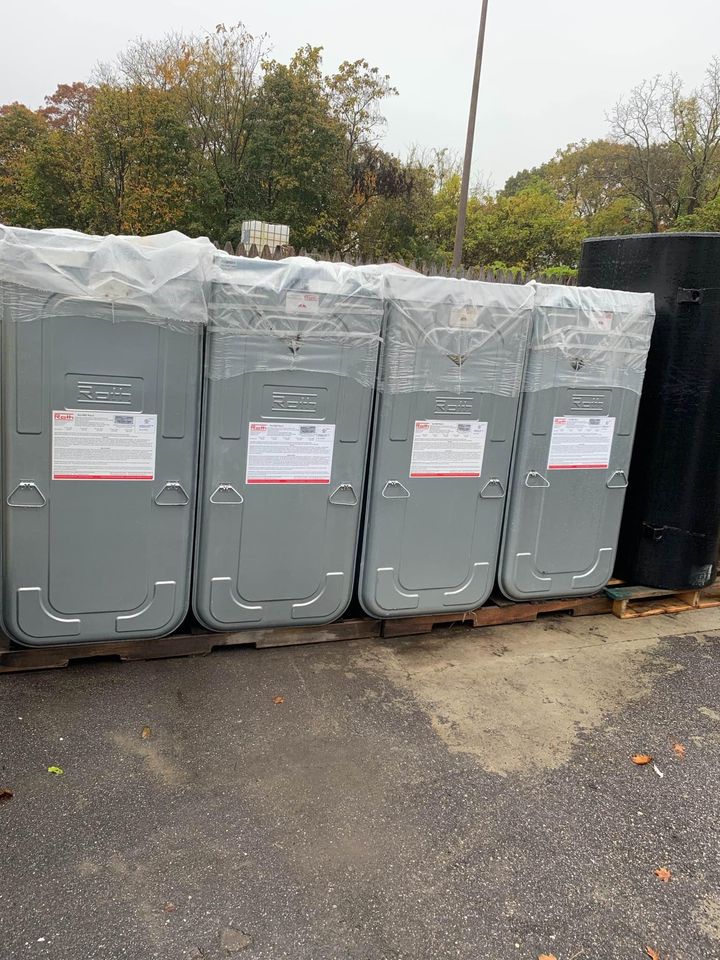
- Roth double-wall — $3,990 installed. Rust-proof polyethylene inner tank, galvanized outer shell, $1 million environmental insurance policy included.
If your property is a co-op or a rental you are responsible for, the double-wall options are worth the difference. The containment layer is not just leak protection — it is a materially smaller liability exposure if something does go wrong in a building with other people in it. That $1 million policy on the Roth exists precisely for that scenario, and boards tend to respond well to it when they see the numbers.
Our Process, Start to Finish
- Free assessment. For a house, we can often price it over the phone. For a building, we come out, look at the boiler room and access route, and give you something in writing you can take to a board or managing agent.
- Scheduling that works for the building. Where other residents are affected, we schedule to minimize downtime and give the super a clear window rather than a vague morning-or-afternoon.
- Removal and installation. Old tank drained, usable oil preserved, tank removed and disposed of, new tank set, connected, and piped. Cut down in place if it cannot leave whole.
- Testing and sign-off. Burner fired, joints pressure-checked, work area cleaned. A single-family replacement typically runs three to four hours.
Where We Work in Jackson Heights
All of 11372 — the historic district blocks around 34th Avenue and 35th Avenue, the co-ops and garden apartments between 76th and 88th Streets, the private houses toward Northern Boulevard and 37th Avenue, the Roosevelt Avenue corridor, and the sections bordering East Elmhurst and Elmhurst. We also cover neighboring Woodside and Astoria.
Our shop is at 34-36 56th Street in Woodside, roughly ten minutes away. More about our team here, or see the whole borough on our Queens service areas page.
Frequently Asked Questions
I live in a Jackson Heights co-op. Can I replace the tank myself?
Almost certainly not on your own. In most garden apartment co-ops the boiler and tank serve the whole building and belong to the corporation, so replacement goes through the board and the managing agent. We are used to that process and will provide a written scope and price you can bring to them.
Do you work with co-op boards and managing agents?
Yes, regularly. We will put the scope, price, and timeline in writing, answer technical questions from the board, and schedule the work for a window that minimizes disruption to residents. It is a slower process than a single-family job, and we plan for that rather than fighting it.
Does the Jackson Heights historic district affect an oil tank replacement?
For a tank inside your basement, no. Interior work is not an exterior alteration and does not trigger Landmarks review. It can matter if a job would change something visible from the street, such as new exterior fill or vent piping on a facade. We will raise it during the estimate if we think it applies to your property.
How much does it cost in Jackson Heights?
For a private house, $3,200 installed for the Granby Standard, $3,890 for the EcoGuard, and $3,990 for the Roth, including removal and disposal of the old tank. Multi-unit buildings run on different equipment and get priced individually after we see the boiler room.
Which tank makes sense for a building with multiple families?
A double-wall tank, without much hesitation. The containment layer meaningfully reduces your liability if the inner tank ever fails in a shared space, and the Roth includes a $1 million environmental insurance policy. Boards tend to find that argument persuasive once they see what a cleanup costs.
How long does the work take?
A single-family replacement is typically three to four hours. A larger building depends entirely on the equipment and access, which is why we look at it before quoting rather than guessing.
What if our tank is leaking right now?
Call (718) 989-2105 immediately. We answer 24 hours for active leaks. Keep people out of the affected area, keep it ventilated, and do not attempt to move or patch the tank. In a multi-unit building notify the super and managing agent at the same time.
More questions about tank sizing, permits, and what affects the final price are answered on our oil tank FAQ page.
Ready to replace your Jackson Heights oil tank? Call for a free estimate. We work with co-op boards and managing agents as well as individual homeowners.
Get Your Free Estimate ➤